Ceramic coating panel by panel: what each surface needs
Most conversations about ceramic coating treat the vehicle as a single surface. The hood gets coated, the doors get coated, the bumpers get coated, and the job is done. In practice, each panel on your vehicle is a different problem. The chemistry of the coating does not change, but the surface condition, the geometry, the exposure profile, and the prep requirements differ significantly from one zone to the next. Installers who understand that distinction produce work that lasts. Installers who do not tend to produce coating failures concentrated in predictable spots.
This is not an abstract concern. Ceramic coatings are applied in thin nanolayers that bond to whatever surface sits beneath them. If that surface has contamination, micro-marring, or residual polish oils, the bond is compromised in that zone. On a flat hood under consistent lighting, those problem areas are easy to catch. On a curved door jamb, a lower rocker panel, or the leading edge of a mirror housing, they are much easier to miss. What follows is a panel-by-panel look at what each surface actually demands.
Hood and front bumper fascia
The hood is the highest-impact panel on most vehicles. It faces direct sun for the majority of the day when the car is parked, and it takes the brunt of highway debris, insects, and road film during travel. On dark-colored vehicles, heat transfer through the hood can be significant enough to affect coating cure if timing is not managed carefully in a climate-controlled environment.
Prep on the hood typically involves the most aggressive decontamination work on the vehicle. Iron fallout accumulates here from brake dust carried forward by airflow. Tree sap and bird etching tend to concentrate on flat horizontal surfaces. If paint correction is part of the service, the hood usually requires the most passes. The goal before any coating goes down is a surface that is chemically clean, mechanically clean, and free of any polish residue.
The front bumper fascia is a different geometry entirely. It is a shaped plastic or composite surface, often with texture variations near the lower edge. The film of the coating has to follow curves and transitions without pooling at edges or pulling thin over raised lines. Application technique matters more here than on the flat hood, and edge coverage needs deliberate attention during both application and leveling.
Doors, fenders, and quarter panels
Vertical body panels accumulate contamination differently than horizontal ones. Water sheeting off these surfaces carries iron particles and road grime downward, which means the lower third of each door and fender tends to be dirtier and more contaminated than the upper section. Clay decontamination on these panels often reveals the gradient clearly.
Paint correction on vertical panels is less physically demanding than on horizontal surfaces, but the correction process has to account for overspray and product migration onto adjacent trim, glass, and rubber seals. Masking around window trim, door handles, and mirror housings adds time but prevents contamination of surfaces that are harder to clean after the fact.
Door jambs and door edges deserve specific mention. These are areas that see mechanical contact every time the door opens or closes, and they are surfaces many installers rush through or skip. Coating the jambs properly requires separate product application into a tighter, less accessible space, and the prep there often involves careful hand work rather than machine polishing. If you are reviewing a quote for ceramic coating work, it is worth asking explicitly whether door jambs are included in the process.
Trunk lid and rear bumper
The trunk lid and rear deck lid are horizontal surfaces with the same UV exposure profile as the hood, but they tend to be in better condition because they do not collect insects and debris the way the front of the vehicle does. That said, trunk lids on sedans and the liftgate area on SUVs often show loading scratches from cargo contact along the trailing edge. Those need to be addressed before coating because the film will lock in whatever surface texture is underneath.
The rear bumper fascia shares geometry challenges with the front bumper, with the added complication of exhaust proximity on performance and some diesel vehicles. Heat cycling near exhaust exits can stress the coating in that localized zone, and surface contamination in that area often includes carbon deposits that need specific solvents to lift cleanly.
Roof, pillars, and rocker panels
The roof is the most sun-exposed surface on the vehicle, full stop. On vehicles that are parked outdoors regularly in North Houston, roof paint often shows the earliest signs of UV stress. It is also a surface that receives less attention during routine washing, which means contamination can build up over extended periods. Coating the roof well requires clean access, adequate lighting above the work area, and often a lift or sturdy working surface so the installer can work at the right angle without stretching.
A-pillars, B-pillars, and C-pillars present a mix of painted and trim surfaces. Painted pillar sections need the same prep as body panels. Textured plastic trim sections should not receive the same coating chemistry, because a coating designed for paint on a plastic trim piece will cure to a different appearance and may not bond correctly. Some shops coat plastic trim with a product formulated for that substrate. Others mask it off entirely. Either approach is defensible, but skipping the distinction and coating everything with the same product is not.
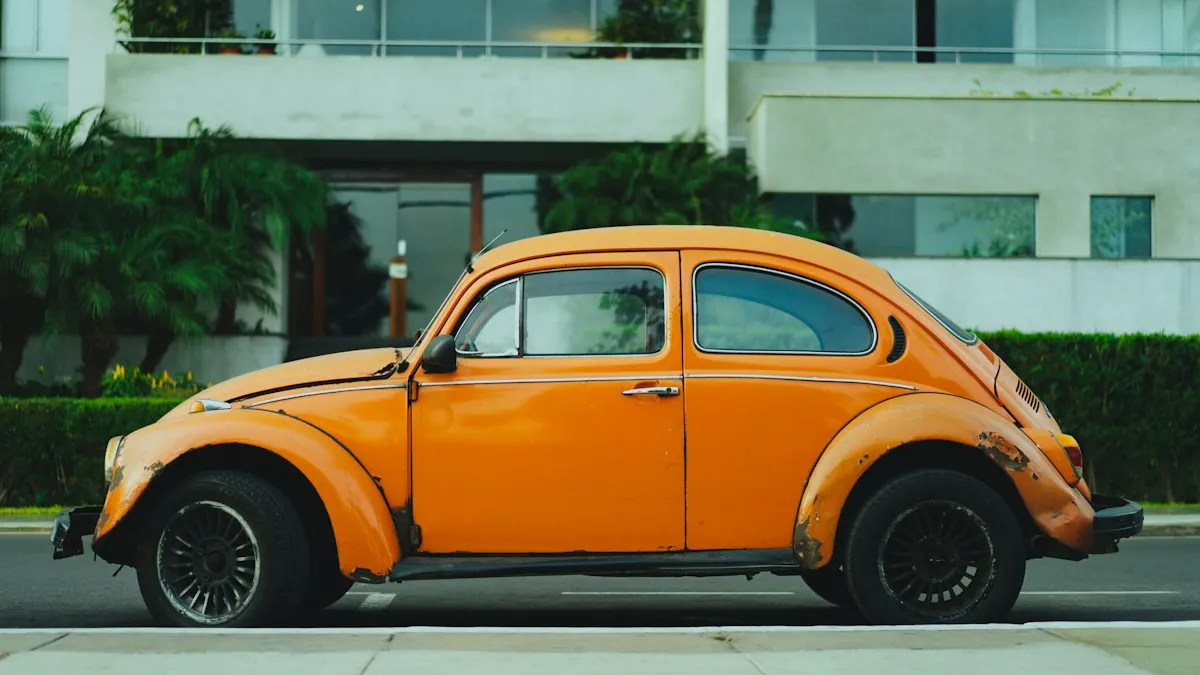
Rocker panels sit at the lowest point of the body and take road spray, pebble strikes, and debris kicked up at short range from the tires. They are among the most abraded surfaces on any daily-driven vehicle, and contamination there is often embedded rather than sitting on the surface. Clay bar alone may not be sufficient. Chemical decontamination followed by careful assessment under light is the standard approach at a shop that is paying attention. For high-impact lower body protection, some owners combine paint protection film on the rockers with ceramic coating on the upper body panels, which gives mechanical impact resistance at the base and chemical resistance across the rest of the vehicle.
Glass, trim, and wheel surfaces
Glass receives ceramic coating in a formulation different from what goes on paint. A glass-specific coating is engineered for a harder, denser substrate, and it produces a hydrophobic surface that causes water to sheet off rapidly at highway speed. The prep on glass requires removal of any existing water spot deposits and contamination, which often means light polishing with a glass-safe compound before the coating is applied. Windshields and side glass each have slightly different considerations because side glass moves, which affects the long-term wear pattern of the coating at the seals.
Exterior plastic trim, unpainted bumper sections, and textured surfaces each respond differently to ceramic chemistry. Some trim-specific ceramic products provide UV protection and modest hydrophobic properties without the hard cure of a paint coating. On vehicles with a lot of exposed trim, this application adds meaningful time to the job because the prep process and product selection differ from what was used three feet away on the painted door.
Wheels are a subject on their own. They are exposed to brake dust at high temperature, and any coating applied there has to survive that thermal cycling. A wheel-specific ceramic product is more resistant to the heat and caustic chemistry of brake dust than a standard paint coating used off-label. Prep on wheels requires thorough mechanical cleaning and decontamination of every barrel surface and spoke face before any coating chemistry touches the metal.
Why this level of detail matters before you commit
A ceramic coating service that accounts for each of these surfaces individually is going to take longer and cost more than one that treats the car as a uniform object. That difference in time and attention is where the durability gap comes from between installations that last and those that fail early in localized zones.
If you are weighing a coating service for a vehicle you plan to keep, or one you want to protect before it enters the resale market, a conversation about surface-by-surface prep is worth having before work begins. The installers at EuroLuxe Detailing in Tomball work through this kind of assessment with every vehicle before a single panel is touched. You can reach the shop at (936) 292-6056 to discuss what your specific vehicle and its current surface condition actually need.
Ceramic coating is not a single product applied uniformly across a car. It is a series of surface-specific decisions made by the person holding the applicator, backed by the prep work that came before it. The panel-by-panel approach is what separates a coating that performs as expected from one that looks fine on delivery and starts failing within the year.