How summer heat damages car paint and what to do about it
Summer in North Houston is not just uncomfortable for the people in the car. It is actively destructive to the vehicle sitting outside it. Temperatures in the Tomball, Conroe, and Cypress area regularly push past 100 degrees Fahrenheit, and pavement temperatures can run 40 to 60 degrees higher than the ambient air. That combination of direct UV radiation, radiant heat from below, and the humidity that cycles through the region creates conditions that degrade automotive paint faster than most owners realize until the damage is already visible.
The problem is that paint damage from heat and UV is cumulative and slow-moving. It does not announce itself the way a rock chip or door ding does. Instead, the finish loses depth, clarity, and gloss over a period of months and years, and by the time oxidation or clear coat degradation is obvious, the correction required is significantly more involved than it would have been with basic preventive care. Understanding what is actually happening at the surface level is the first step toward protecting it.
What UV radiation does to automotive clear coat
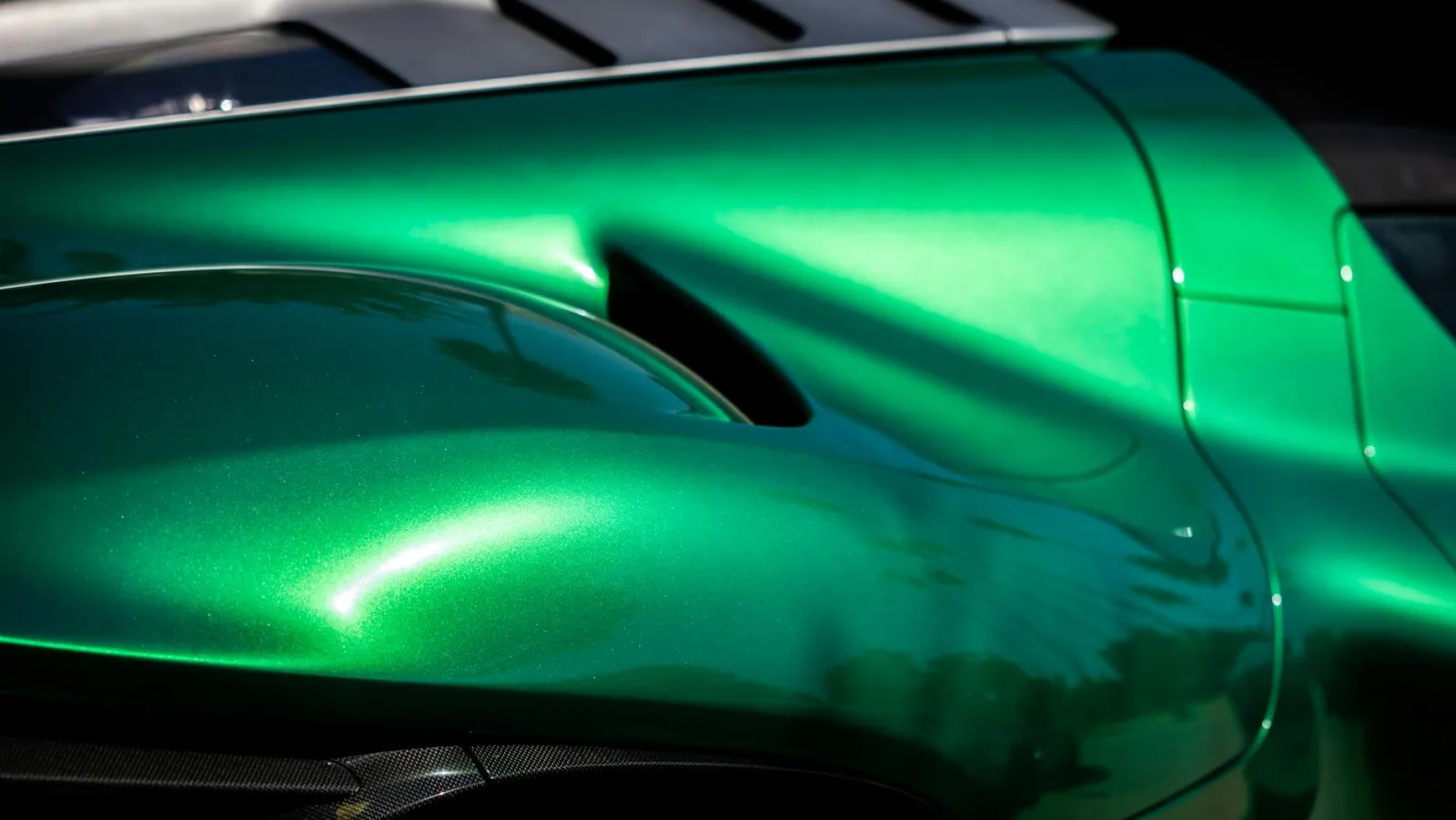
Modern vehicles wear a transparent clear coat layer over the base color coat. That clear coat handles the majority of UV exposure so the color beneath it does not fade directly. But the clear coat itself is a polymer, and UV radiation breaks down those polymer chains over time through a process called photodegradation. The result is a surface that loses its gloss, becomes hazy or milky in appearance, and eventually begins to flake or peel away from the color coat underneath.
The rate at which this happens depends on several variables: the quality of the original factory paint, how much shade or garage time the vehicle gets, whether any protection layer exists on top of the clear coat, and how consistently the paint is maintained. A vehicle that lives in a driveway in Magnolia or Spring with no coverage and no protection layer will show measurable clear coat degradation faster than one that is detailed and protected on a regular schedule.
One thing worth clarifying: UV damage does not stop at a clean car. Even a freshly washed vehicle with bare clear coat is exposed every hour it sits outside. Cleanliness matters for contamination, but it does not block UV.
Heat expansion and its effect on existing defects
Paint is not a rigid material. It expands when hot and contracts when cool, and that thermal cycling happens every single day in Texas. For a vehicle with an intact, undefended paint surface, this is largely a non-issue. For a vehicle with existing micro-scratches, stone chips, or clear coat that is already compromised, the repeated expansion and contraction works those defects open gradually.
A small rock chip that in a cooler climate might sit stable for years can begin to develop a rust halo in a Texas summer because the paint around the chip is flexing constantly. Water intrusion is another concern. Chips and micro-cracks that might drain or dry in a milder climate hold moisture longer in humid Houston summers, giving corrosion a better opportunity to establish itself below the surface.
This is part of why timing matters when it comes to paint correction. Correcting a finish before summer rather than after means defects are addressed before the season’s heat and UV load has a chance to compound them. Waiting until fall to address damage that started in spring means several additional months of degradation.
Contaminants that summer makes worse
Heat accelerates chemical reactions, including the ones that make road contaminants destructive to paint. Bird droppings are the most well-known example. The uric acid in droppings etches into clear coat within hours when temperatures are high, rather than the longer window you might have in cooler conditions. Tree sap becomes more liquid and penetrates surface pores more readily. Bug splatter, which hits the front of every vehicle doing highway miles on I-45 or 249, bakes onto painted surfaces faster and becomes significantly harder to remove without mechanical intervention.
Iron fallout from brake dust is also a problem that summer magnifies. Brake dust particles embed in paint year-round, but the heat causes them to oxidize and bond to the clear coat more aggressively. If you run your hand across a wheel well or lower door panel and feel roughness after a thorough wash, that is often embedded ferrous contamination that a standard wash will not remove.
A proper decontamination process involving iron remover and clay bar treatment is the correct response, and it is worth doing before any protection product goes on top of the surface. Sealing contamination under a coating or film creates a different set of problems.
What protection actually does in a Texas summer
There are two categories of protection worth understanding here: surface protection and physical barrier protection.
A ceramic coating creates a hard, chemically resistant layer on top of the clear coat. It does not stop UV entirely, but it significantly slows the degradation of the clear coat beneath it by absorbing and deflecting a portion of UV load. More practically, it changes the surface chemistry so that contaminants like bird droppings, sap, and bug splatter sit on top of the coating rather than bonding directly to the clear coat. That extends the window for safe removal from hours to a more workable timeframe. A coated surface also sheds water and road contamination more readily, which reduces the frequency of contact between the paint and harmful materials.
Paint protection film provides a physical barrier rather than a chemical one. A quality TPU-based film, installed correctly, absorbs stone chips and road debris before they can reach the painted surface. On the front of a vehicle doing highway miles in summer, the impact frequency from road debris is high, and the exposed hood, bumper, fenders, and mirror caps take the bulk of that load. Coverage decisions vary by owner and budget, but the areas that face forward are the ones that accumulate damage fastest in daily driving.
The most durable approach combines both: film on the high-impact zones and a ceramic coating over the entire vehicle, including over the film. Each layer does its own work, and together they reduce the maintenance burden significantly while protecting the finish across multiple threat categories.
Practical habits that reduce summer damage
Protection products extend your margin, but habits matter too. Parking in shade whenever it is available is an obvious one, but it is worth being specific about: even 20 to 30 minutes of direct sun exposure in a Texas afternoon represents meaningful UV load. A shaded spot or a garage is not just more comfortable for the people getting in the car; it represents less UV exposure accumulated over the life of the vehicle.
Washing frequency is another consideration. In summer, vehicles accumulate contaminants faster. A wash every one to two weeks is reasonable for most daily drivers in the North Houston area, and using a proper two-bucket hand wash method or a touchless wash rather than an automatic tunnel wash prevents adding swirl marks on top of UV and heat damage. Letting bug splatter or bird droppings sit for days in summer is a reliable way to shorten the life of your clear coat.
If your vehicle does not have a protection layer and is showing early signs of dullness or reduced water beading, that is worth addressing before the damage goes deeper. Reaching out to a qualified installer for an assessment costs nothing and gives you an accurate picture of what the paint needs and in what order.
Reading the early warning signs
The signs that summer heat is winning are subtle at first. A slight reduction in the depth or clarity of the finish in direct sunlight. Water that sheets off less cleanly than it used to. A surface that feels rougher than it looks. Swirl marks that seem more visible in harsh lighting than you remember. None of these mean the paint is ruined, but each one is the finish telling you that the clear coat is losing the battle with the environment.
At EuroLuxe, Caleb Vasquez does a thorough paint inspection before any service. The goal is not to recommend work that is not needed but to give an honest account of what the surface shows and what the options are. If a vehicle needs correction before protection, doing them in the right order matters. If the paint is in reasonable condition and just needs a protection layer, that is a different conversation. Either way, the assessment starts with what is actually on the paint.
Closing
Texas summers are long and the UV load is significant. The vehicles that hold their finish through five and ten years of North Houston ownership are the ones that got protected early and maintained consistently, not the ones with the most expensive factory paint option. If you want to talk through what your vehicle’s paint needs going into or coming out of summer, call EuroLuxe at (936) 292-6056. The shop is at 11701 Holderrieth Rd in Tomball, and the conversation starts with what your specific car needs, not with a package menu.