Paint correction on door jambs and shuts: the overlooked surfaces
When people bring a car in for paint correction, the conversation almost always centers on the horizontal surfaces — the hood, the roof, the trunk lid — and the vertical panels like the doors and fenders. Those are the surfaces a buyer sees from twenty feet away, and they are the ones that show swirl marks most dramatically under direct light. What rarely comes up, even with experienced owners, is the door jambs and shuts. Open a door on a car that has been through multiple polishing services and you will sometimes find chalked-out oxidation, old wax buildup, grease from hinges, road grime that migrated through the gap, and scuff marks from belt buckles and rings. The finish inside a jamb sees genuine wear, and it gets essentially no attention in most correction services.
That neglect is partly understandable. Jambs are tight, awkward, and time-consuming to work. A full-size dual-action polisher cannot reach most of what needs to be done. You end up switching between smaller backing plates, foam applicators, and hand tools, working slowly around hinges, wiring looms, and door-check straps. The labor cost per square inch is high relative to the visual payoff from a distance. But when you are standing next to the car with the doors open — at a car show, handing keys to a valet, or walking a buyer through the vehicle — those jambs tell the full story of how the car has been maintained.
This piece covers what paint correction inside door jambs and shuts actually involves, what defects are correctable and which are not, and how the work fits into a broader correction or coating package.
What accumulates inside a door jamb
The painted surfaces inside a door jamb are generally the same clear-coated finish as the exterior, though the clear coat is sometimes thinner in these recessed areas because of how spray guns reach them during factory application. Over time, a few categories of contamination and damage show up.
Oxidation is common on older vehicles and on any car that has been parked outdoors consistently. The clear coat in the jamb area does not get the same wax or sealant applications that the exterior receives, so it has less protection against UV and moisture. You will see this as a whitish, chalky appearance — sometimes confused with dried wax residue, but wax residue wipes off cleanly while oxidation does not.
Transfer marks from clothing, bags, and hands are extremely common. Belt buckles and metal buttons are particularly damaging — they leave pressure marks and fine scratches along the lower leading edge of the jamb, right where a person swings in and out of the car. These are surface-level scratches in the clear coat and are correctable in most cases.
Grease and road contamination migrate from hinges and the gap between the door and body. This requires chemical decontamination before any polishing, otherwise you are just spreading contamination across the surface with a pad.
What the correction process looks like in a jamb
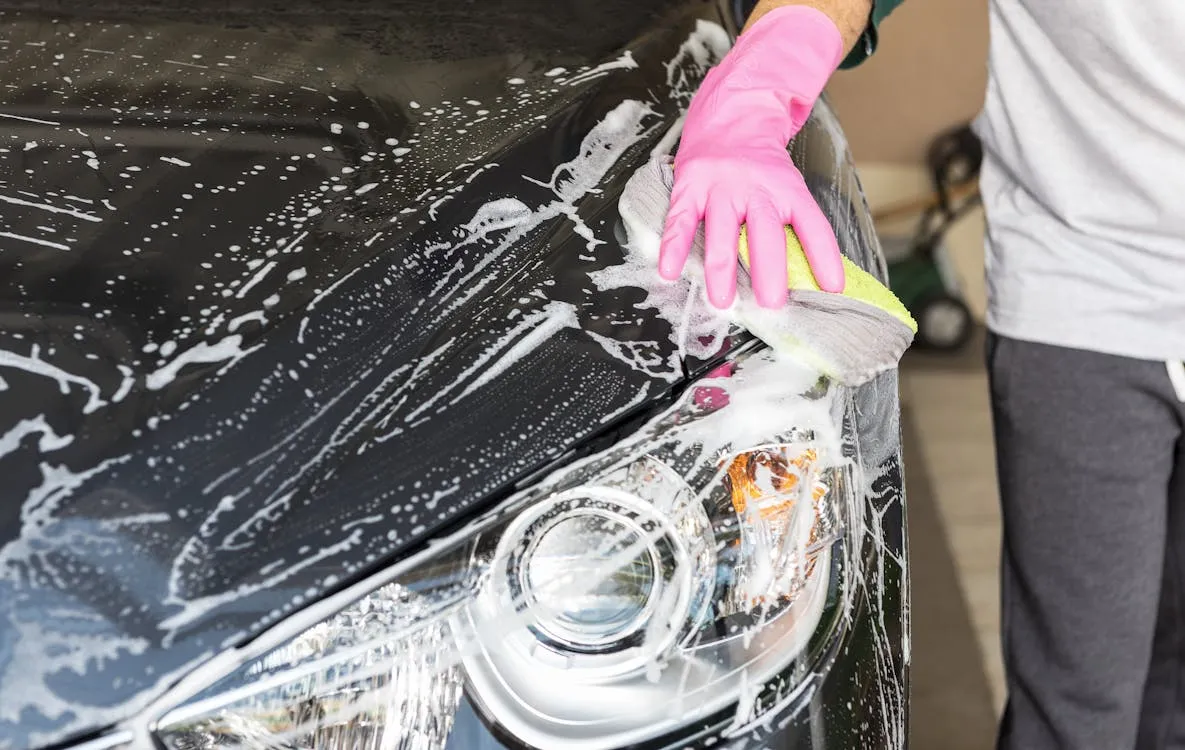
The first step is always a thorough wash of the jamb surfaces — something most car washes skip entirely. Road grime, dried detailing products, and loose contamination need to come off before you can assess what you are actually dealing with. After washing, an iron remover is applied to pull out ferrous contamination, followed by a panel wipe with an IPA solution to strip any remaining residue and give a clear read of the defects.
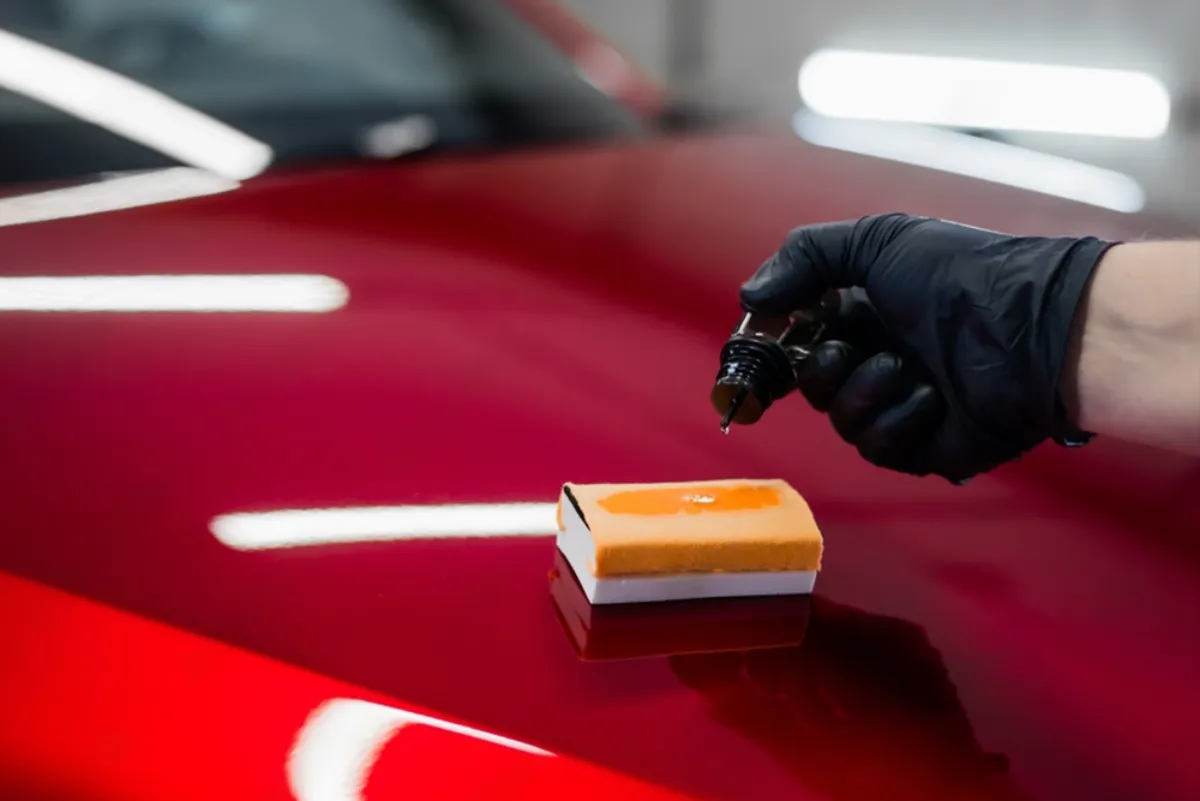
Once the surface is clean and decontaminated, the actual correction work begins. A standard 5- or 6-inch backing plate will not fit into most jamb areas, so the work shifts to a 3-inch pad on a smaller backing plate, or a Lake Country hand pad for areas that are too recessed even for a small machine. The product choice follows the severity of the defects — a light polish for fine swirls and transfer marks, a medium compound for moderate oxidation, stepping back to a polish to refine the finish afterward.
Working around door hinges requires removing or masking them if they are painted, because compound and polish residue baked into hinge hardware is difficult to remove and looks poor. Wiring grommets and drain holes need to be protected as well. This is detail-oriented work that moves slowly, and any shop quoting a jamb correction that sounds like a quick add-on is probably not actually doing it correctly.
How jamb condition affects a coating or prep service
If a vehicle is coming in for a ceramic coating or a paint protection film installation, the jamb surfaces matter more than many owners realize. A ceramic coating applied over uncorrected jambs means locking in that oxidation and those scuff marks under a durable layer that is difficult to remove. The coating will still protect the surface, but the cosmetic condition underneath it is permanent for the life of the coating.
For film installations, the door jambs themselves are not typically wrapped, but the edges of the film terminate near the jamb area. If the surrounding paint is in poor condition, the transition between corrected exterior paint and neglected jamb paint becomes obvious as soon as the door opens.
At EuroLuxe, jamb surfaces are part of the paint assessment on any vehicle that comes in for a full correction service. Whether they get addressed depends on the scope of work the owner approves, but we always call out their condition during the initial inspection so there are no surprises when the doors open at pickup.
What cannot be corrected in a jamb
The same limits that apply to exterior paint correction apply here, and in some cases the threshold is lower because the clear coat in jamb areas can be thinner from the factory. Deep scratches that have broken through the clear coat into the base coat cannot be polished out — removing enough material to eliminate them would expose bare paint. Stone chips on the lower edges of the jamb, which are common from road debris, are in the same category. Those require touch-up work or a specialist, not correction.
Severe oxidation that has eaten through the clear coat will not respond to polishing either. You may be able to clean and refine the surface, but if the clear coat is gone, the only real correction is a respray of those panels. A paint thickness gauge reading taken inside the jamb during the inspection process gives a concrete picture of how much working room exists before any cutting begins.
Unpainted or lightly textured plastic trim inside some jambs — common on trucks and SUVs — is also outside the scope of paint correction. Those surfaces are cleaned and dressed, but polishing painted trim compound into textured plastic produces no useful result.
Scheduling and what to expect
Jamb correction is almost always quoted as part of a larger service rather than as a standalone appointment, because the exterior and jamb surfaces need to be in the same condition to make sense cosmetically. Correcting the jambs while leaving the exterior untouched produces a mismatched result. Correcting the exterior and ignoring the jambs leaves the work obviously incomplete from six inches away.
Vehicles requiring this level of work should plan for a multi-day appointment. The preparation, correction, and refinement steps cannot be rushed without affecting results, and working in our climate-controlled installation bay means temperature and humidity are controlled throughout the process — which matters when you are working with compounds and polishes in small, recessed areas where flash times behave differently than on open panels.
If you are unsure whether the jambs on your vehicle need correction or whether the defects you are seeing are correctable, call us at (936) 292-6056 and describe what you are seeing, or bring the car by the shop at 11701 Holderrieth Rd in Tomball for an in-person look. An honest assessment before booking saves time for everyone.
Door jambs will not win a show trophy on their own, but they are one of the first things a knowledgeable person looks at when evaluating how a vehicle has been cared for. Keeping that finish in the same condition as the rest of the car is straightforward when it is part of a regular correction schedule — and considerably more involved when years of neglect have built up.