
PPF Financing and Affordable Options: How to Make Paint Protection Film Fit Your Budget
PPF Is an Investment — And There Are Smart Ways to Afford It
The number one reason people skip paint protection film is cost. Not because they do not want it. Not because they do not understand the benefits. Simply because the upfront price tag feels steep next to the other expenses that come with buying a new vehicle.
We get it. When you have just spent $40,000 to $80,000 on a truck or SUV, the idea of adding another $1,500 to $8,000 on top feels like a lot. But the math on PPF is more favorable than most people realize once you factor in what unprotected paint costs you over the ownership period.
This guide breaks down the real costs, shows you how to prioritize coverage on a budget, and lays out the financing options that make professional PPF installation manageable for most vehicle owners.
What PPF Actually Costs: An Honest Breakdown
PPF pricing varies based on coverage area, film quality, and the complexity of your vehicle’s body panels. Here is what you should expect to pay for professional installation using premium film (XPEL Ultimate Plus, SunTek Ultra, STEK DYNOshield, or equivalent):
Partial Front Coverage: $800-$1,500
This covers the most vulnerable forward-facing surfaces:
- Front bumper
- Partial hood (typically 18-24 inches of coverage from the leading edge)
- Mirror caps
This is the entry-level package and the bare minimum for highway-driven vehicles. It protects the areas that take the most rock chip damage at the lowest cost.
Best for: Budget-conscious buyers who drive mostly highway miles and want to prevent the most common and visible paint damage.
Full Front Coverage: $1,500-$3,000
The most popular option, covering:
- Full hood
- Full front bumper
- Full fenders
- Mirror caps
- Headlights (optional, adds $200-400)
- A-pillars and partial roof line (optional)
Full front coverage protects every panel that faces oncoming road debris. For most daily drivers and commuters, this is the sweet spot between cost and protection.
Best for: Daily commuters, highway drivers, anyone who plans to keep the vehicle for 3+ years.
Full Body Coverage: $5,000-$8,500+
Every painted surface covered:
- Full front (hood, bumper, fenders)
- Doors
- Quarter panels
- Rocker panels
- Roof
- Trunk or tailgate
- Rear bumper
- All trim pieces and edges
Full body is the premium choice. It protects against door dings in parking lots, shopping cart scratches, kid-on-bicycle scuffs, and all the random damage that happens to the sides, rear, and roof of your vehicle.
Best for: Luxury and exotic vehicles, vehicles you plan to keep long-term, cars parked in busy commercial lots, anyone who wants total protection.
Price Factors That Shift These Ranges
Several things move the price within each range:
- Vehicle size. A Porsche 911 costs less to wrap than a Ford F-250 because there is simply less surface area. Trucks and full-size SUVs sit at the higher end of each range.
- Body complexity. Vehicles with compound curves, aggressive body lines, and complex bumper designs take longer to install and cost more. A Tesla Model 3 is relatively simple. A Lamborghini Huracan is not.
- Film brand. XPEL Ultimate Plus and SunTek Ultra are in a similar price tier. Some specialty films or thicker variants may carry a slight premium.
- Add-ons. Headlight and taillight coverage, door edge guards, door cup protection, and rocker panel wraps add to the base package price.
The ROI Argument: PPF Cost vs. Paint Damage Cost
This is where the math gets interesting. Most people compare the cost of PPF against spending nothing. The real comparison should be PPF cost against the cost of the paint damage you will pay for later.
Scenario 1: Highway Commuter Without PPF (5-Year Ownership)
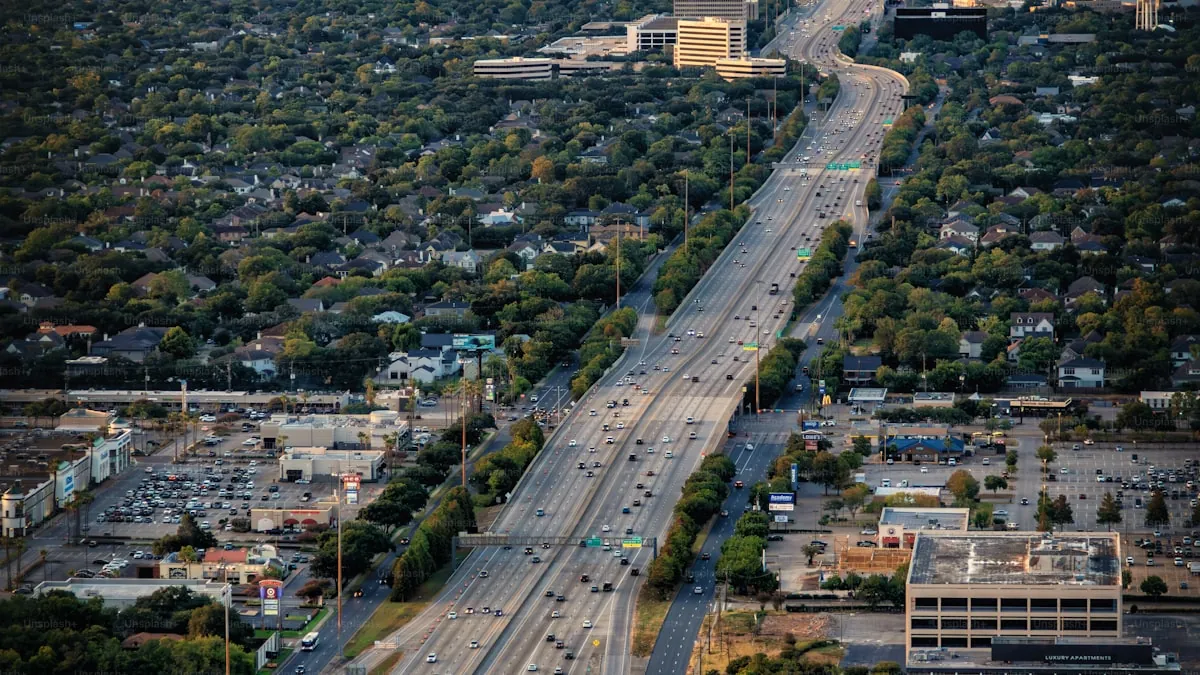
A typical Houston commuter driving I-45 or Highway 249 daily without PPF can expect:
- Rock chip touch-ups (DIY): $50-100 in supplies per year, still visible upon close inspection
- Professional rock chip repair: $75-150 per session, needed 1-2 times per year = $375-1,500 over 5 years
- Paint correction at trade-in to improve resale: $500-1,200
- Resale value reduction from visible paint wear: $1,000-3,000+ depending on severity and vehicle value
- Potential hood or bumper respray if damage is severe: $800-2,500
Total cost of NOT having PPF over 5 years: $1,925-$8,300
Scenario 2: Same Commuter With Full Front PPF
- PPF installation: $1,500-3,000 (one-time cost)
- PPF maintenance products: $50-100 over 5 years
- Paint condition at trade-in: Excellent — no correction needed on protected areas
- Resale value: Preserved — PPF tells buyers the car was well maintained
Total cost with PPF over 5 years: $1,550-$3,100
The numbers are close to break-even on a 5-year ownership cycle, and PPF becomes the clear winner on anything longer. For a 7-10 year ownership cycle, PPF saves thousands. For luxury and performance vehicles where paint correction and resale value stakes are higher, the math is even more favorable.
The Hidden Cost: Depreciation Impact
Here is the number most people miss. A vehicle with visible rock chips, faded paint, and clear coat wear sells for measurably less than the same vehicle in excellent cosmetic condition. For a $50,000 vehicle, the difference between “good” and “excellent” paint condition at trade-in can easily be $2,000-4,000.
PPF pays for itself in preserved resale value alone on many vehicles, before you even account for the avoided repair costs.
Financing Options That Make PPF Accessible
Shop Financing and Payment Plans
Many professional PPF shops, including EuroLuxe Detailing, offer financing or payment plan options that break the cost into monthly payments. Common structures include:
- 0% interest for 6-12 months through third-party financing (Affirm, Sunbit, or similar)
- 3-4 payment installments split across 60-90 days
- Credit card-based financing where the shop processes the payment through a financing platform
For a $2,500 full front PPF installation financed over 12 months at 0%, you are looking at roughly $208 per month. That is less than most car insurance premiums and significantly less than a single car payment.
Rolling PPF Into Your Vehicle Loan
If you are buying a new vehicle, some dealerships will add PPF to the purchase price and roll it into the vehicle financing. This is worth exploring, but compare the numbers carefully:
- Dealership PPF pricing is often 20-40% higher than an independent shop because the dealer marks up the work
- You pay interest on the PPF cost over the full loan term (5-6 years at 5-7% interest adds 25-40% to the real cost)
- Installation quality varies significantly — dealerships typically subcontract to whoever bids lowest
In most cases, financing PPF separately through the installing shop is cheaper overall than rolling it into a vehicle loan. But if cash flow is the primary concern and you want one monthly payment, the dealer route is available.
Credit Card Strategy
For buyers who have access to a credit card with a 0% introductory APR period (many cards offer 12-18 months of 0% on purchases), using that card for PPF installation and paying it off during the 0% period is effectively the same as 0% shop financing.
This also works well if your credit card offers cash back or rewards points on the purchase. A 2% cash back card on a $3,000 PPF installation gives you $60 back.
Tax Deduction for Business Vehicles
If your vehicle is used for business purposes, PPF installation may be deductible as a vehicle maintenance or protection expense. Consult your accountant, but many business owners successfully deduct PPF as a cost of maintaining business assets. For a full body installation at $6,000-8,500, the tax savings at a 25-30% marginal rate represent $1,500-2,550 in real money back.
Budget Strategies: Getting the Most Protection for Your Dollar
If full body PPF is beyond your current budget, these strategies let you prioritize coverage where it matters most for the least money.
Strategy 1: Start With Partial Front, Expand Later
Get the partial front package ($800-1,500) now and add coverage later. PPF can be installed in stages. Start with the bumper and partial hood to stop the most damaging rock chips, then add full fenders and the remaining hood when your budget allows.
The most important thing is getting something on the car now rather than waiting for the “perfect” budget moment while your paint accumulates damage.
Strategy 2: Prioritize Based on Your Driving Pattern
- Highway commuter: Full front is the priority. The hood and bumper take 80% of the damage.
- City driver with lots of parking lot time: Door edges, rocker panels, and rear bumper matter more for you. Consider a partial front plus door edge and rocker panel coverage.
- Off-road or rural driving: Fenders, rocker panels, and lower body panels take the most abuse. Some PPF shops offer off-road-specific packages focused on these areas.
Strategy 3: Protect the Most Expensive Panels First
Not all paint repair costs the same. On many vehicles, the hood and front bumper are the most expensive panels to repaint because of their size and visibility. Protecting those panels with PPF addresses the highest potential repair cost first.
For trucks, the tailgate is another high-value target — tailgate repainting on an F-150 or Sierra runs $800-1,500.
Strategy 4: Combine PPF With Ceramic Coating Strategically
Instead of full body PPF, consider full front PPF combined with ceramic coating on the remaining surfaces. The PPF handles the high-impact areas that need physical protection, while the ceramic coating protects the rest of the vehicle from UV, chemicals, and environmental damage.
This combination typically costs $2,500-4,500 for full front PPF plus full body ceramic coating — significantly less than full body PPF while still providing comprehensive protection. For many drivers, this is the optimal balance of cost and coverage.
Strategy 5: Skip the Add-Ons You Do Not Need
Headlight PPF ($200-400), mirror cap PPF ($100-200), and door cup PPF ($100-150) are nice to have but not essential for everyone. If budget is tight, put that money toward more hood or fender coverage instead. Headlights are relatively cheap to replace if they get damaged, and mirror caps and door cups are low-priority cosmetic areas.
What to Avoid When Trying to Save Money on PPF
Do Not Choose Budget Film to Save Money
The cost difference between premium and budget PPF is relatively small (maybe $200-500 on a full front installation), but the performance difference is enormous. Budget PVC-based films yellow faster, lose self-healing ability sooner, and have shorter lifespans. You end up replacing the film in 3-5 years instead of getting 7-10 years from premium TPU film.
Saving $300 on film that lasts half as long is not saving money. It is paying more over time.
Do Not DIY PPF Installation
DIY PPF kits are tempting at $200-600 for a hood kit. But PPF installation requires specific tools, a controlled environment, and technique that takes months or years to develop. Misaligned edges, bubbles, trapped debris, and improper stretching are extremely common with DIY installs and usually result in the film needing to be removed and redone professionally — costing you the kit price plus the full professional installation fee.
Do Not Delay Protection Waiting for a Better Deal
Every month your car sits unprotected, it accumulates paint damage that reduces its value and may require paint correction before PPF can be installed. A $500 paint correction session that became necessary because you waited 6 months wiped out any savings from waiting.
The best time to install PPF is the day you take delivery. The second-best time is today.
Questions to Ask When Comparing PPF Quotes
When shopping for PPF installation, these questions help you compare quotes accurately:
- What film brand are you using? Ensure it is a premium TPU film from a reputable manufacturer.
- Is this price for bulk roll or pre-cut installation? Bulk roll (custom cut on the vehicle) provides better edge coverage and a cleaner finish. Pre-cut kits are cheaper but may have visible edges.
- What warranty comes with the installation? Both the film manufacturer warranty and the shop’s workmanship warranty matter.
- What does your prep process include? Proper installation includes a thorough wash, decontamination, and any necessary paint correction to ensure a clean surface under the film.
- Do you offer financing or payment plans? If so, what are the terms and is there an interest charge?
Frequently Asked Questions
Is there 0% financing available for PPF installation?
Many shops partner with third-party financing companies like Affirm or Sunbit that offer 0% APR for 6-12 months on qualifying purchases. Call us at (936) 292-6056 to ask about current financing promotions and payment plan options at EuroLuxe Detailing.
Can I finance just the PPF and pay for ceramic coating separately?
Yes. PPF and ceramic coating are separate services with separate invoicing. You can finance one, both, or neither independently. If you are having both done at the same appointment, we can often structure the financing to cover the combined total.
How much should I budget per month if I finance full front PPF?
For a typical full front PPF installation in the $1,800-2,500 range financed over 12 months at 0%, expect monthly payments of $150-210. That is comparable to a moderate car insurance premium and provides a decade of paint protection.
Is PPF more cost-effective than repainting damaged panels?
Almost always. A professional repaint of a hood and front bumper costs $1,500-3,500 at a quality body shop. Full front PPF costs $1,500-3,000 and prevents the damage that would require repainting. Plus, factory paint always looks better than aftermarket repaint, and PPF preserves the factory finish indefinitely.
Can I get PPF on just the bumper to start and add more later?
Absolutely. Bumper-only PPF is typically $400-800 depending on the vehicle. It is the single most cost-effective coverage you can buy because the bumper is the most chip-prone panel. You can add hood, fender, and other coverage at any time — we match edges seamlessly when extending coverage on subsequent visits.
Does PPF help my car hold its value enough to justify the cost?
Yes, particularly on vehicles worth $40,000 and above. The difference in resale value between a car with excellent paint condition and one with visible rock chips and wear easily exceeds $2,000-4,000 on mid-range vehicles and can reach $5,000-10,000 on luxury vehicles. PPF preserves paint in showroom condition, which directly translates to higher trade-in and private sale values.
Want to explore PPF options that fit your budget? Get a free quote from EuroLuxe Detailing or call (936) 292-6056. We will walk you through coverage options, pricing, and financing to find the right protection package for your vehicle and your wallet. Serving Tomball, The Woodlands, Spring, Cypress, Magnolia, and the greater North Houston area.