Professional Ceramic Coating vs. DIY Kits: The Real Differences
Consumer ceramic coating kits have gotten genuinely better over the past few years. Products like Gyeon Q2 Lite, Chemical Guys HydroSlick, and various other consumer-grade options produce real hydrophobic results that look impressive immediately after application. If you’re watching YouTube application videos, the results can look indistinguishable from professional work.
They’re not the same thing. Here’s the honest breakdown of what’s actually different, why the differences matter over a 3 to 5 year ownership window, and where the gap shows up in practice.
The Chemistry: Silica Concentration and Cross-Link Density
Ceramic coatings work through SiO2 (silicon dioxide) or SiC (silicon carbide) particles bonding to the paint surface and curing into a hard, chemically resistant layer. The key variables are how much SiO2 is in the product and how densely it cross-links during cure.
Professional-grade coatings like GYEON MOHS EVO typically run 80% to 90%+ SiO2 concentration. At this concentration, the cured coating forms a dense, continuous protective layer with genuine hardness in the 9H range on the pencil hardness scale. That’s the hardest rating the scale measures — harder than automotive clear coat and most contaminants that would otherwise scratch it.
Consumer DIY products typically run 50% to 70% SiO2, often mixed with carrier solvents and application aids specifically designed to make the product more forgiving to apply. These aids help prevent the high spots and streaking that high-concentration products produce on unskilled application — but they also dilute the effective coating layer. Cured hardness for these products is typically in the 4H to 6H range.
This hardness gap has practical consequences. A 9H coating resists light swirl marks and surface abrasion that will mark a 4H–6H coating. When you wash a vehicle over three years, the cumulative effect of that hardness difference is the gap between a coating that still beads water well and one that has developed micro-scratches and begun to lose hydrophobic performance.
Prep: Why This Is Where Most DIY Applications Fail
Professional and consumer coatings both require clean, decontaminated, defect-free paint for proper bonding. The difference is that professionals prepare the surface professionally.
A proper ceramic coating prep sequence involves:
- Chemical decontamination — iron fallout remover and tar remover to clear embedded particles that a regular wash leaves behind
- Clay bar or clay mitt treatment — mechanical decontamination to remove bonded surface contamination
- Paint correction — machine polishing to remove swirl marks, fine scratches, and any existing oxidation before sealing them under the coating
- IPA wipe-down — isopropyl alcohol panel wipe to remove all polish residue and oils before coating application
Most DIY applications skip or abbreviate multiple steps here. The result: contamination bonded under the coating, swirl marks locked in permanently, and areas where the coating doesn’t adhere consistently because the surface wasn’t properly prepped. These issues show up under lighting within the first year and worsen as the coating ages.
If your paint has swirl marks or any existing damage, applying a coating over it preserves that damage in place — you’re sealing in the problem. Paint correction before ceramic coating is part of the service at EuroLuxe because it directly determines how the finished result looks and how long it performs.
Application: The High-Spot Problem
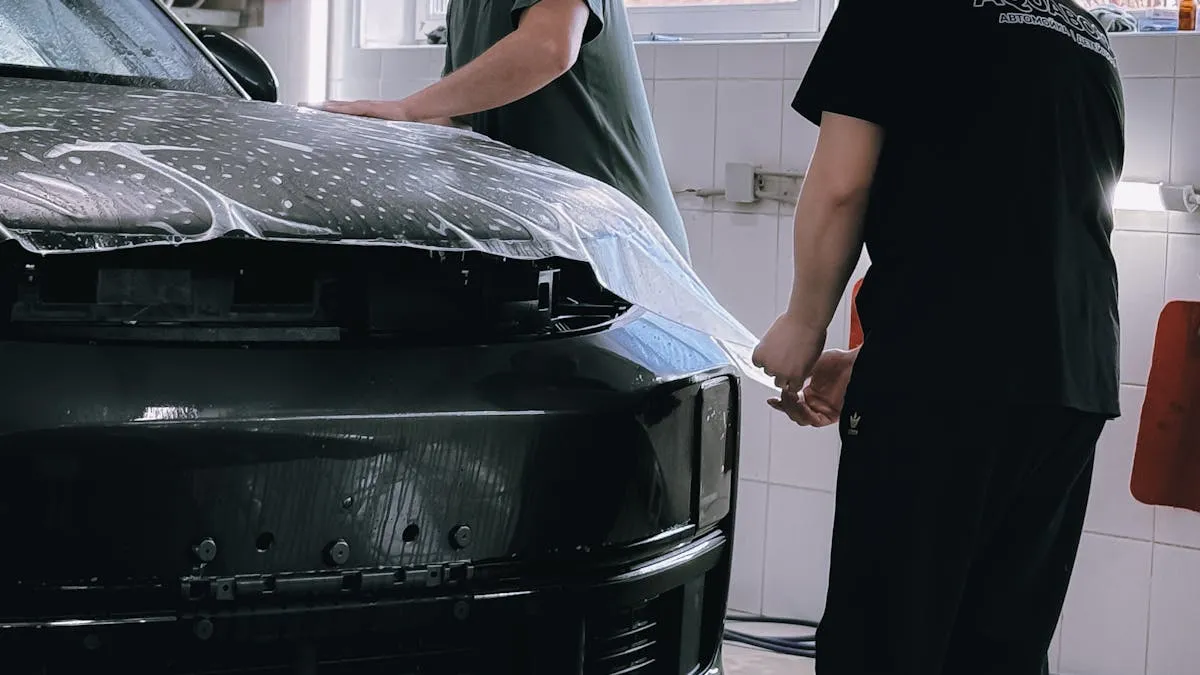
High-concentration professional coatings have a narrow application window. Once applied and allowed to flash (the period when the carrier solvent evaporates), the coating must be buffed within a specific time frame — often 1 to 3 minutes depending on temperature, humidity, and product formulation. Miss this window and the coating flashes to a high spot: a visible, hazy area where the product cured unevenly.
Removing a high spot after the coating has fully cured requires machine polishing — which means removing the coating in that area entirely and reapplying. Experienced installers work in small sections specifically to manage this window.
Consumer products are formulated with extended flash times and application aids that reduce this risk. This makes them genuinely more forgiving to apply. It also means the active layer is less dense than what a professional achieves with proper technique.
Layering and Multiple-Coat Systems
Professional ceramic coating systems typically involve multiple coats. A base coat bonds to the paint. One or more top coats add thickness, hardness, and specific performance properties. The GYEON MOHS EVO system is designed as a layered installation with specific products for base, top coat, and maintenance reinforcement.
Consumer products are primarily single-coat applications. Some can be layered, but the lower SiO2 concentration means each layer adds less to the overall protection matrix. The result is a thinner effective coating with less resistance to the things that degrade coatings over time — UV, washing abrasion, and chemical exposure.
Warranty: What “Guaranteed” Actually Means
Professional coatings from certified installers come with two-layer warranties: the installer’s workmanship guarantee and the product manufacturer’s warranty. GYEON’s professional installer network, for example, offers manufacturer-backed warranty coverage that requires certification to access. If the coating fails within the warranty period, there’s a defined recourse process.
Consumer products cannot offer manufacturer-backed warranties through third-party installers. The warranty terms, where they exist, are typically limited to product replacement — not reinstallation or coverage for paint damage if the application goes wrong.
For a vehicle worth $30,000 to $100,000+, the warranty structure is not a minor detail. It’s the backstop for the investment you’re making in the coating.
The Honest Verdict
Consumer ceramic coating kits are a reasonable option for budget-conscious owners who want some hydrophobic protection and understand they’re getting a temporary product. In Texas’s UV environment, most consumer coatings will show meaningful performance degradation within 12 to 18 months. If you’re applying a $50 kit every year as a maintenance layer, that’s a different value calculation than buying it as a long-term protection solution.
Professional ceramic coating with GYEON MOHS EVO is a 3 to 5 year installation that performs and looks significantly better throughout that window. The prep work alone — proper decontamination, paint correction, controlled installation conditions — produces a paint finish quality that most vehicles haven’t seen since they left the factory.
If you’re considering the investment and want an honest assessment of what your specific vehicle needs, call us at 936-292-6056 or get a quote. We’ll walk through your paint condition and tell you exactly what we’d recommend.
Keep Your Vehicle Looking Its Best
Graphene Ceramic Coating vs. Standard: What’s the Difference?
When to Reapply Ceramic Coating
Ceramic Coating Cure Time and Houston Humidity